
NEWS CENTER
In the world of engineering technology and product development, pressure is a critical parameter that is omnipresent yet elusive. Whether it is the tightness of engine bolts or the uniformity of contact between a tire and the ground, the magnitude and distribution of pressure directly affect equipment performance, safety, and service life. While electronic sensors are undoubtedly precise, their deployment in complex working conditions, confined spaces, or harsh environments is often prohibitively difficult and costly. Pressure-sensitive paper, with its unique "pressure visualization" capability and exceptional cost-effectiveness, has become an indispensable inspection tool for engineers.
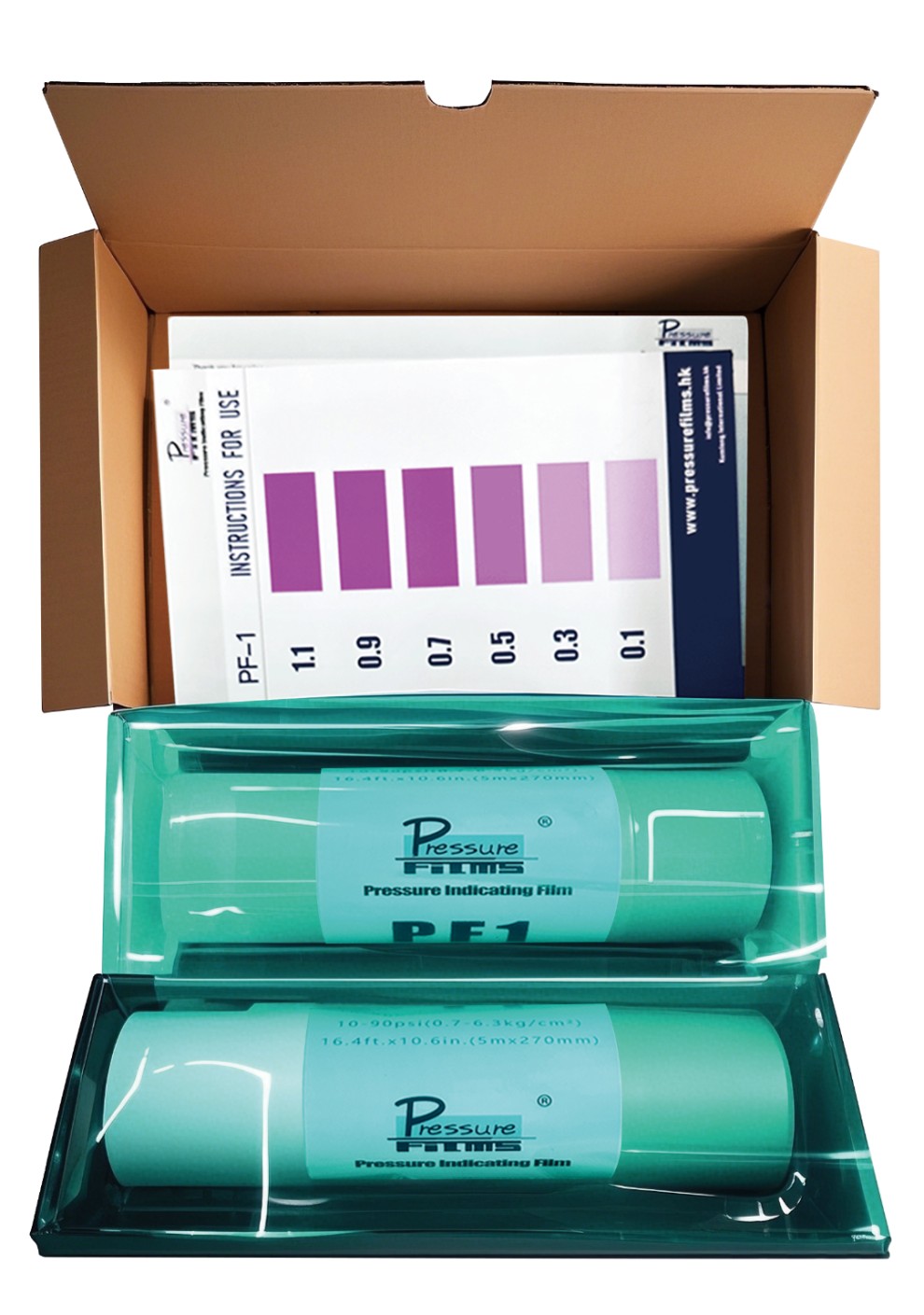
The working principle of PressureFilms pressure-sensitive paper is based on an innovative micro-shear force color development technology. When two specially treated film layers come into contact under pressure, precise molecular diffusion and pigment transfer occur, forming a visual image that corresponds to the pressure distribution. Combined with the TOPAQ pressure paper data analysis system, these pressure images can be converted into full-color pressure maps and detailed statistical data, supporting both 2D and 3D visual analysis with magnification up to 400% without distortion. From fasteners to rollers, from tracks to the plantar surface of the foot... This measurement method is particularly suitable for scenarios where traditional sensors are difficult to deploy or cannot be installed.
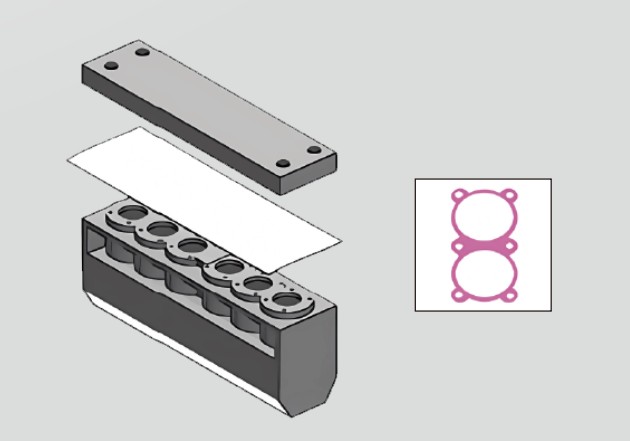
In the field of mechanical manufacturing and power systems, PressureFilms pressure-sensitive paper is commonly used to measure the fastening pressure of connections. The bolted connection status of critical components such as engines, gearboxes, valves, and cylinders directly impacts the equipment's sealing integrity and operational reliability. While traditional torque wrenches can control the tightening torque, they cannot reflect the actual pressure distribution on the contact surface. Engineers cut PressureFilms pressure-sensitive paper to the appropriate shape, place it between flange connection surfaces or under bolt gaskets, tighten it according to the specified torque, and then remove it. By observing the uniformity of the color development on the pressure-sensitive paper, they can determine whether the pressure is balanced. Uneven color distribution indicates potential tilting or deformation of the contact surface, necessitating remachining or adjustment of the assembly process.
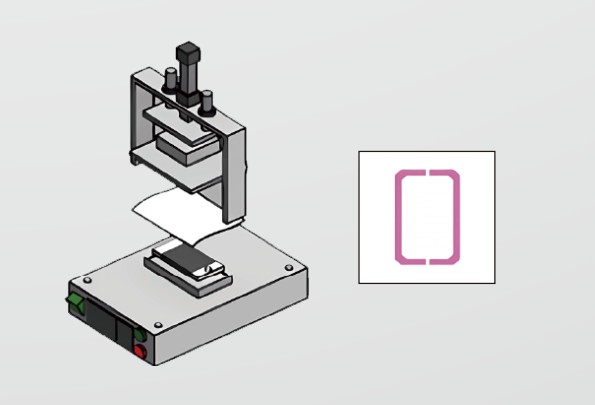
Take the oil pan as an example. By placing PressureFilms pressure-sensitive paper at the joint surface, tightening the bolts for full closure, and then removing it, the sealing integrity of the joint—crucial for preventing oil pan leaks—can be inspected by observing the color development. Similarly, at the metal seal joint of a carburetor, PressureFilms pressure-sensitive paper can be used to confirm the seal's tightness and verify that the specified pressure is maintained at a certain value. If a portion of the color develops too lightly, even if the overall color development is above the specified concentration, it may indicate deformation or misalignment caused by uneven stress distribution.
In the field of heavy machinery and civil engineering, PressureFilms pressure-sensitive paper provides a simple and effective solution for evaluating support pressure. The ground pressure of machine bases, bridge bearings, main beam support points, and tracked vehicles can all be inspected using pressure-sensitive paper. Taking tracked vehicles as an example, the contact pressure distribution between the track and the ground not only affects the vehicle's trafficability but also determines the extent of its damage to the road surface. Engineers lay a large-format sheet of PressureFilms pressure-sensitive paper flat on the ground and guide the vehicle to drive over it slowly. The imprint left on the paper clearly reveals the magnitude and distribution of the track pressure. If pressure is found to be concentrated on a specific section of the track, it may indicate improper suspension system adjustment or issues with track tension.
Furthermore, in the measurement of support pressure for heavy structures such as bridge piers, ships, and bulldozers, PressureFilms pressure-sensitive paper is also widely used due to its simplicity and intuitive nature.
Automotive manufacturing is an extremely precise process, in which PressureFilms pressure-sensitive paper plays an indispensable role. Its applications are integrated throughout the entire process, from component assembly to full-vehicle safety testing.
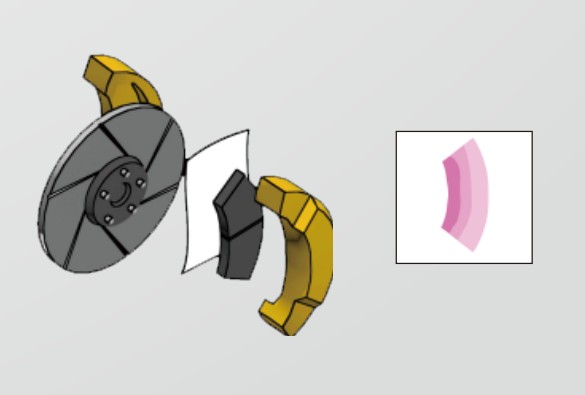
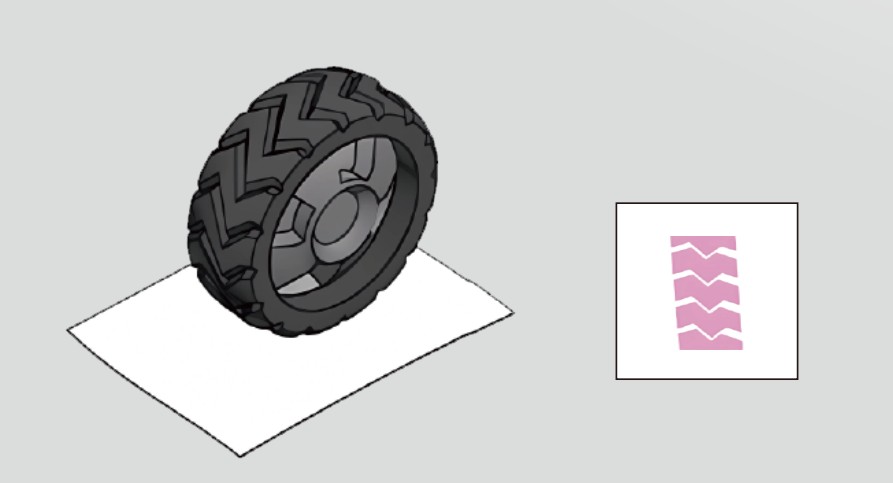
As mentioned earlier, in powertrain assembly, PressureFilms pressure-sensitive paper can be used to measure the bolt fastening pressure of critical components such as the engine, transmission, and brake pads. In tire footprint pressure testing, by applying PressureFilms pressure-sensitive paper to the ground, placing the tire on the paper under load, or driving a short distance, the tire's contact pressure distribution can be examined by observing the color development on the paper. This data is of significant value for tire design, suspension tuning, and the optimization of vehicle handling performance.
In continuous production industrial lines, the uniformity of roller pressure directly impacts product quality. Whether it is the calender rolls of a paper machine, the impression cylinders of a printing press, the nip rolls of a paint applicator, or the contact pressure between embossing rolls, all must be strictly controlled.
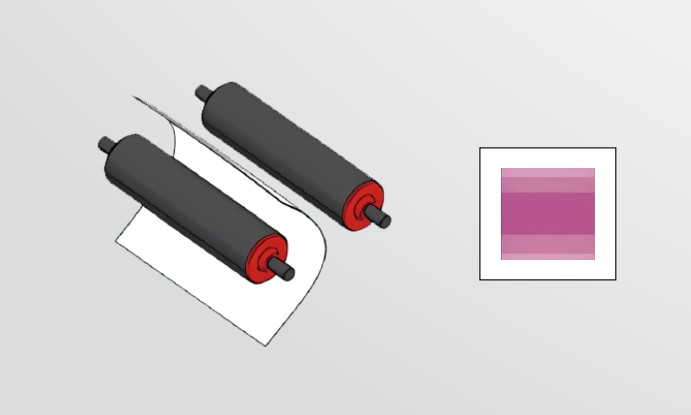
Taking the paper industry as an example, the uniformity of pressure between calender rolls directly determines the consistency of paper thickness and the smoothness of its surface. Engineers cut PressureFilms pressure-sensitive paper to an appropriate size and feed it between two rotating rolls, allowing the rolls to engage and roll over it normally. An ideal imprint should have consistent width and uniform color. If variations in color depth appear, it indicates potential issues such as roll wear, non-parallel installation, or uneven pressure distribution, which require timely adjustment.
In the printing industry, PressureFilms pressure-sensitive paper can be used to measure the contact pressure between blanket cylinders and impression cylinders, ensuring uniform ink transfer. During the winding process of materials like film, paper, and cables, the pressure-sensitive paper can also be used to detect winding pressure, ensuring a reasonable pressure gradient from the core to the outer layers and preventing wrinkles or indentations. In lithium battery production, the calendering process after electrode coating demands extremely high pressure uniformity; uneven pressure can lead to inconsistent electrode thickness, subsequently affecting battery consistency and safety. PressureFilms pressure-sensitive paper plays a critical role in quality control during this stage.
In the assembly of liquid crystal displays, the lamination pressure between the backlight module and the liquid crystal glass must be uniform; otherwise, it can lead to uneven display brightness or the appearance of ripples. Engineers place PressureFilms pressure-sensitive paper at the lamination interface, remove it after pressing, and obtain micron-level pressure distribution data through high-resolution scanning and analysis of the color development density. PressureFilms offers a variety of pressure range options, covering a wide spectrum of needs from precision electronics to heavy forging.
In semiconductor manufacturing, PressureFilms pressure-sensitive paper can be used to measure the pressure distribution during the wafer polishing process and the contact pressure during chip mounting. By verifying whether the contact pressure between the heat sink and the chip surface is uniform, poor heat dissipation caused by local gaps can be avoided. In the assembly of precision bases, the pressure-sensitive paper can also be used to measure the base pressure of precision equipment such as liquid crystal displays, ensuring the stability of the equipment installation.
With the rapid development of new energy technologies, the application of PressureFilms pressure-sensitive paper in emerging fields such as fuel cells is becoming increasingly widespread. A fuel cell is a device that directly converts chemical energy into electrical energy. Its performance is influenced by multiple factors, among which the uniformity of pressure distribution and contact area is critical to the efficiency and lifespan of the fuel cell.
During the assembly process of a fuel cell, the pressure distribution between the multiple components must be uniform to ensure efficient operation. Any unevenness in pressure can lead to localized hot spots, gas leakage, or component damage, thereby reducing the fuel cell's efficiency and lifespan. Flexible fabric or thin-film type pressure distribution test equipment often has a certain thickness, making it difficult to place and measure between the components of a fuel cell. PressureFilms pressure-sensitive paper, due to its ultra-thin, enables effective measurement in these spaces.
In today's era of rapidly advancing sensor technology, pressure-sensitive paper still holds a unique and stable position in engineering applications due to its advantages of simplicity, intuitive results, and high resolution. With the development of new material technologies and smart manufacturing, pressure-sensitive paper is evolving from a single-use consumable inspection tool towards intelligence, reusability, and data traceability. In this sense, pressure-sensitive paper is not only an inspection tool for engineers but also a window into the world of precision manufacturing and intelligent monitoring.
Recent Post
![]() Sep 30, 2026PF invites you to attend ICMMB 2026, the 24th International Conference on Medical and Biological Mechanics (Oct. 6–8).
Sep 30, 2026PF invites you to attend ICMMB 2026, the 24th International Conference on Medical and Biological Mechanics (Oct. 6–8). Jun 18, 2026Focus on Plantar Pressure Distribution | Technical Applications of the Pressurefilms Insole‑Type Flexible Fabric Pressure Distribution System
") May 21, 2026Invitation丨PRESSURE FILMS INTERNATIONAL LIMITED Invites You to the 2nd Vietnam International Electronics Industry & Smart Manufacturing Expo 2026 (VIEE2026)
May 21, 2026Invitation丨PRESSURE FILMS INTERNATIONAL LIMITED Invites You to the 2nd Vietnam International Electronics Industry & Smart Manufacturing Expo 2026 (VIEE2026) May 21, 2026From Vector Sensing to Multi-Dimensional Decision-Making | A Full-Field Application Analysis of PressureFilms High-Precision 3D Force Plates


Contact Us
Derect Contact with us