NEWS CENTER
When an icebreaker crashes through an ice layer, the force is not uniformly distributed across the hull—it concentrates on a few "hot spots." Similarly, the impact force of a high-pressure water jet is not a monolithic block but gradually decays from the center to the edges... These forces are real, yet they never manifest in ways visible to the naked eye.
What PRESSURE FILMS aims to do is to reveal the true nature of these forces, transforming invisible impact forces and pressure fields into visualizable 2D or 3D pressure distribution maps. Unlike traditional pressure sensors or indirect measurement methods, PRESSURE FILMS operates stably in harsh environments such as humid, underwater, or low-temperature conditions. It not only outputs a single value—"how great the impact intensity is"—but also precisely reveals deeper performance metrics such as "whether the force is evenly distributed," "which area concentrates the energy," and "how the pressure changes over time," providing comprehensive data support for engineering analysis and design optimization.
In the fields of polar and marine engineering, this precise measurement capability directly impacts structural safety and life assessment. When an icebreaker navigates through ice zones, the collision between the hull and sea ice is a complex dynamic loading process. By using the PRESSURE FILMS waterproof pressure distribution measurement system to monitor the ice load pressure distribution on the hull surface in real time, it is possible to accurately identify the hot spots and patterns of ice-induced fatigue—for example, specific areas of the hull shell plate. Combined with the rainflow counting method and Miner's cumulative damage theory, this enables a scientific assessment of the hull structure's service life, providing a critical basis for moving polar vessel design optimization from theoretical calculations to empirical validation.
Similarly, in the calculation of ice loads on propellers, simulating the ice-blade contact process and obtaining the instantaneous pressure distribution on the blade surface can help predict the risk of deformation under extreme loads, ensuring the reliability of propulsion systems when navigating in ice zones. For underwater robots, monitoring the pressure distribution on the shell under deep-sea water pressure and ocean current impacts is directly related to the optimal design of pressure-resistant structures and the precision of motion control—serving as an essential technical foundation for autonomous deep-sea equipment operations.
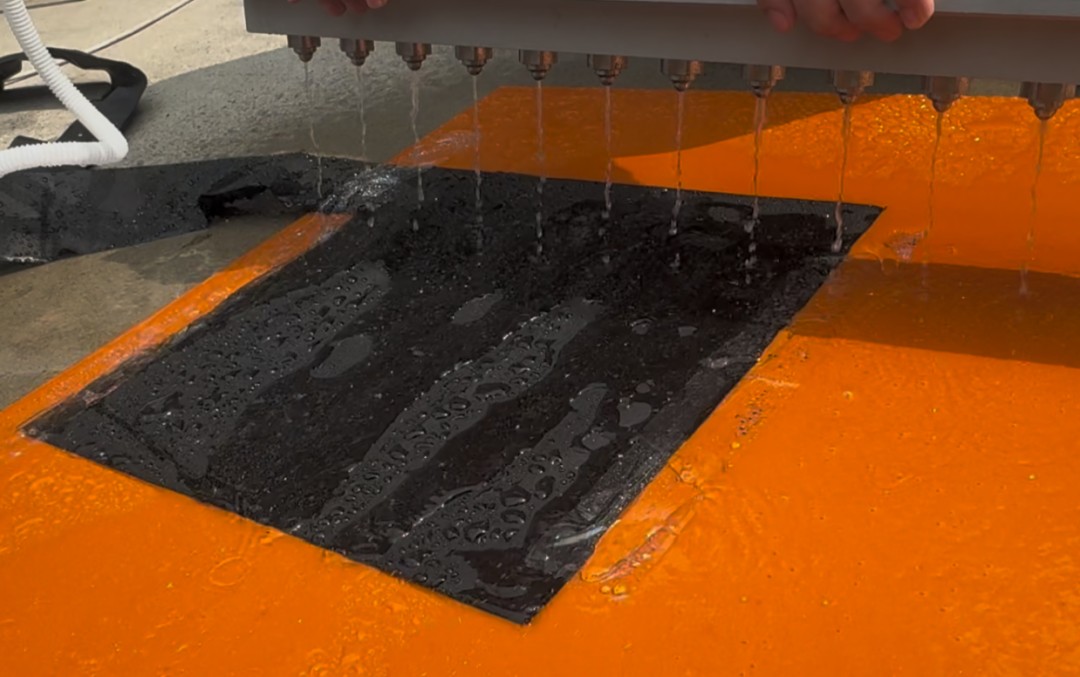
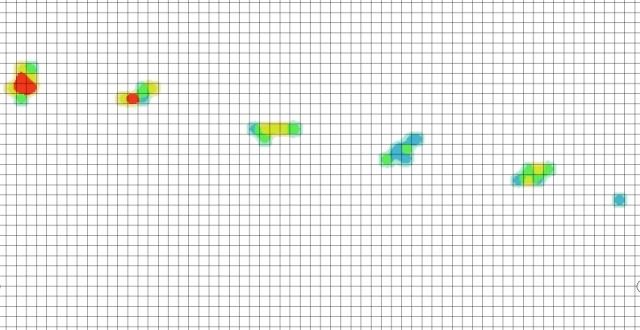
The fields of hydraulic and ocean engineering also face complex fluid-structure interaction problems, where the PRESSURE FILMS waterproof pressure distribution measurement system plays an irreplaceable role. On critical facilities such as docks and offshore platforms, deploying flexible sensors can quantify the impact force distribution of waves on structures, providing firsthand data for disaster prevention design and bridging the gap between theoretical models and actual operating conditions.
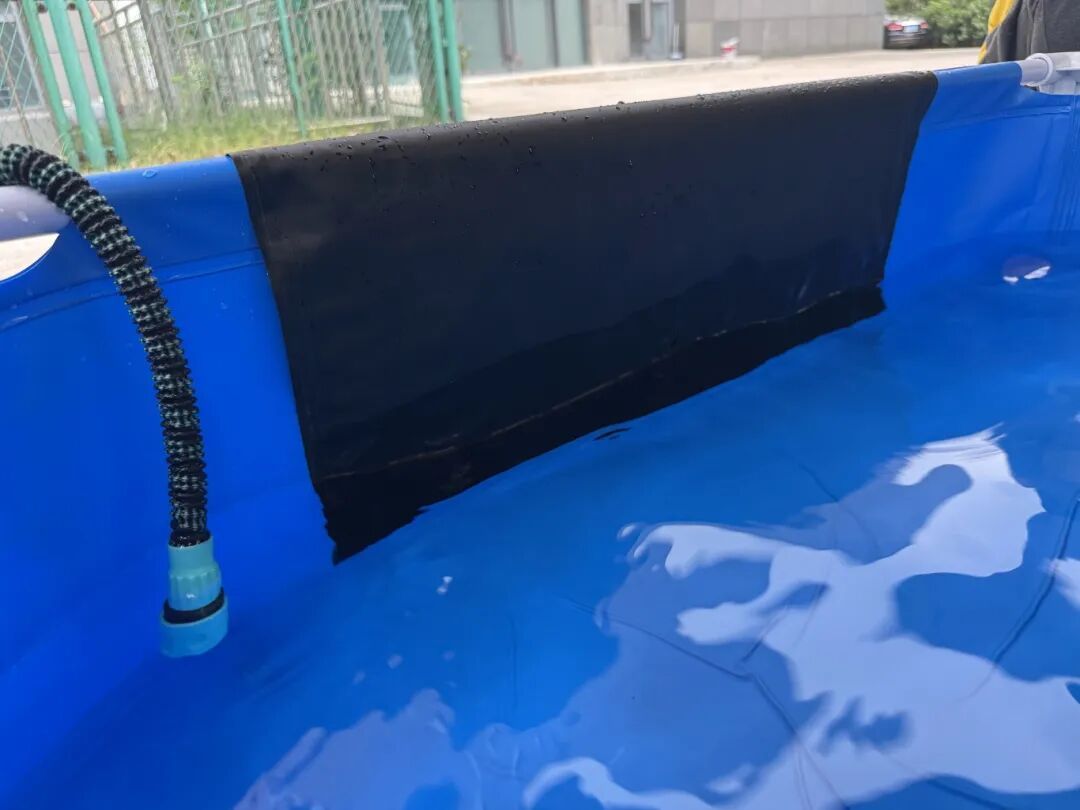
In the optimization of water flow impact, whether it concerns the product design of showerheads and spray systems or the structural safety assessment of dam spillways, PRESSURE FILMS plays a core role. Taking a showerhead product as an example, the Coandă effect is used to enhance water jet impact and extend spray distance through guide plate design. The actual effect ultimately needs to be verified by PRESSURE FILMS—whether the pressure distribution across the porous water outlets is uniform and whether the impact force meets expectations—all of which can be accurately measured by the waterproof pressure distribution device to guide product iteration. In dam spillways, monitoring the local erosion pressure of high-velocity water flow on the dam body helps identify potential structural damage risks early and prevent major safety accidents.
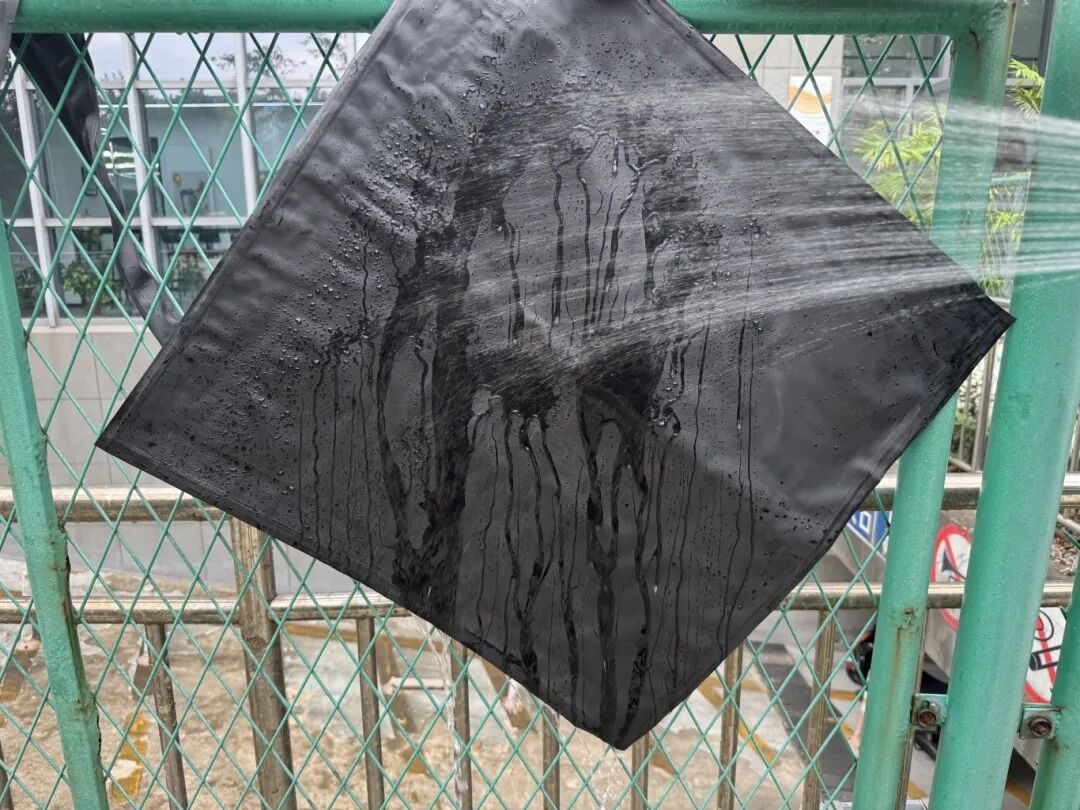
Extending from large-scale engineering facilities to everyday consumer products, sanitary ware and spa systems also benefit from the PRESSURE FILMS waterproof pressure distribution measurement system. By placing a PRESSURE FILMS flexible pressure-sensing mat on a smart toilet seat, the pressure distribution of the human sitting posture can be analyzed, assisting wheelchair users or individuals with mobility impairments in selecting an appropriate pressure-relieving cushion, thereby effectively preventing pressure ulcers. In the design of jacuzzi tubs and spa jets, PRESSURE FILMS is used to optimize the pressure output pattern of the jets, enabling precise calibration of pulsed massage effects and water flow coverage uniformity, elevating user experience from subjective perception to quantifiable engineering metrics.
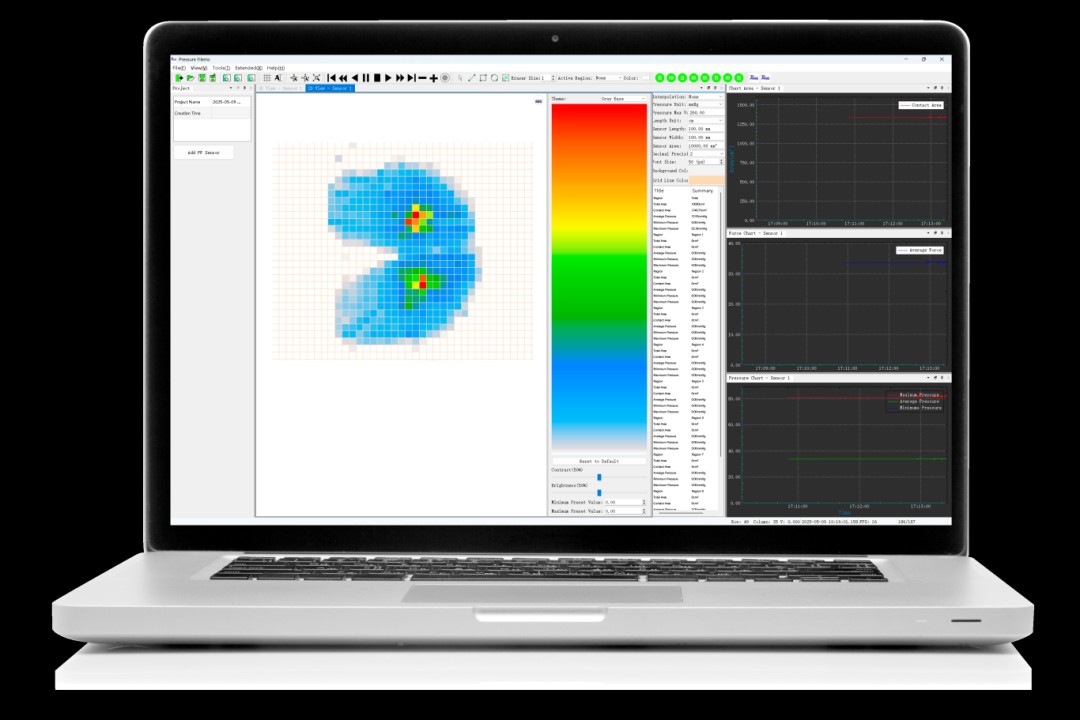
As a vital pillar of the national economy, transportation and infrastructure demand long-term, stable, and precise solutions for structural health monitoring. In railway tracks under long-term operation, monitoring the dynamic pressure distribution in the wheel-rail contact area can identify local stress concentration points on the rail, providing critical data for preventing fatigue cracks and supporting the transition from "periodic maintenance" to "condition-based maintenance." For subgrades and bridges, the PRESSURE FILMS embedded sensor network can continuously monitor pressure anomalies caused by uneven subgrade settlement or overloaded vehicles, offering an ongoing basis for structural health assessment. In the design of debris flow protection structures, PRESSURE FILMS can quantify the peak pressure and spatial distribution of debris flow impacting a retaining wall, helping engineers optimize the dimensions and structural configuration of protective works, enhance disaster prevention and mitigation capabilities, and shift hazard defense from experience-based judgment to data-driven decision-making.
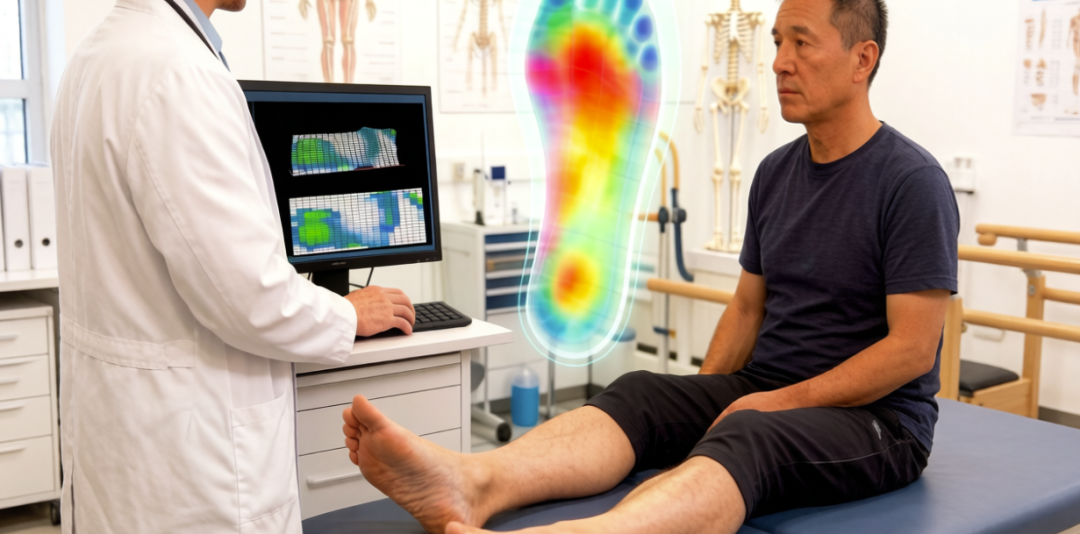
Healthcare and health management represent a rapidly expanding application area for PRESSURE FILMS pressure distribution measurement technology in recent years. Its core value lies in establishing a precise correlation between the physical parameter of pressure and human health. Smart rehabilitation mattresses or cushions integrated with PRESSURE FILMS flexible sensors can generate real-time pressure distribution maps, helping caregivers adjust a patient's posture in a timely manner to effectively prevent pressure ulcers. This application not only reduces patient suffering but also significantly lowers the burden on caregivers. In the field of surgical robotics, PRESSURE FILMS waterproof sensors provide tactile pressure feedback for the interaction between instruments and tissues, further enhancing the precision of minimally invasive surgery, offering surgeons a more intuitive operational feel, and filling the technological gap of missing tactile sensation in robotic surgery.
Applications in industrial and special environments further test the durability and adaptability of PRESSURE FILMS, with its technological value becoming particularly evident under extreme conditions. The PRESSURE FILMS waterproof pressure distribution measurement system can be bent arbitrarily. For monitoring water pressure inside pipelines, it can be attached directly to the pipe wall to detect fluid pressure fluctuations and water hammer effects, helping maintenance personnel prevent pipe burst risks and ensure the safe operation of energy and chemical pipelines. In underwater welding and construction equipment, PRESSURE FILMS can provide real-time feedback on the contact pressure between a robotic arm and hydraulic structures, avoiding overload damage to equipment or structures and enhancing the safety and efficiency of underwater operations.
The flourishing development of consumer electronics and smart devices has also opened up new application spaces for PRESSURE FILMS pressure distribution measurement. In the field of wearable electronic skin, PRESSURE FILMS sensors are used in products such as gesture-recognition gloves and sports protective gear. Their excellent waterproof and breathable properties allow them to withstand long-term erosion from sweat and environmental humidity, providing a new sensory dimension for human-computer interaction.
The fields of environmental and disaster monitoring also require the precise pressure-sensing capabilities of PRESSURE FILMS, where applications are often characterized by urgency, regional specificity, and high risk. In assessing the impact of floods on buildings, PRESSURE FILMS sensors temporarily deployed on bridge piers and embankments can record the spatiotemporal distribution characteristics of flood impact forces, providing empirical evidence for post-disaster analysis and the revision of disaster prevention standards. In glacier calving monitoring, PRESSURE FILMS can be deployed on the edges of ice shelves to capture anomalous pressure fluctuation patterns preceding a breakup, opening new technological pathways for glacier dynamics research and disaster early warning, helping humanity better understand and respond to the challenges posed by climate change.
In the realm of sports and safety protection, PRESSURE FILMS pressure distribution measurement technology also demonstrates broad prospects, with its core focus on ensuring personnel safety in extreme environments. Monitoring external pressure on diving suits can provide early warning of localized high-pressure areas during deep dives, preventing equipment failure caused by pressure concentration and ensuring the safety of deep-sea personnel. In impact testing of firefighter suits, quantifying the distribution of reaction forces from high-pressure water jets helps improve the ergonomic design of the suits, enhancing firefighter comfort and safety during operations and reducing physical strain during extended duties.
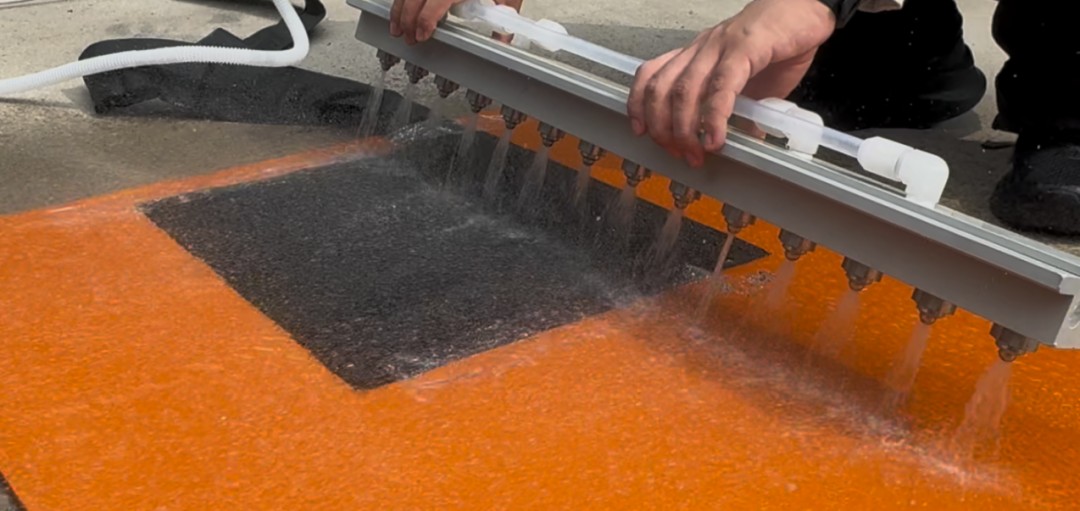
As application scenarios continue to expand and deepen, PRESSURE FILMS pressure distribution measurement technology itself is also continuously evolving. In terms of multi-physics field integration, combining sensors for temperature, flow velocity, etc., with PRESSURE FILMS pressure distribution measurement enables coupled analysis of the environment and structure—for example, in the low-temperature fatigue assessment of ice-going vessels, simultaneously capturing the variation patterns of both temperature and pressure fields provides more comprehensive input conditions for structural design. Extracting characteristic patterns from complex time-series signals allows for early warning of incipient structural damage, such as the initiation of micro-cracks in railway subgrades, achieving a leap from passive response to active prevention.
From the collision between an icebreaker and sea ice to the gentle contact between a smart cushion and the human body; from the turbulent impact in a dam spillway to the delicate touch of a surgical robot's precise operation—the PRESSURE FILMS waterproof pressure distribution device allows engineers to see how energy is distributed, how forces are transmitted, and how structures respond. It also enables designers to move from experience-based judgment to data-driven scientific optimization. In modern engineering systems that pursue precision, efficiency, and reliability, this kind of "visible force" is becoming an indispensable metric across more and more fields.
Recent Post
![]() Sep 30, 2026PF invites you to attend ICMMB 2026, the 24th International Conference on Medical and Biological Mechanics (Oct. 6–8).
Sep 30, 2026PF invites you to attend ICMMB 2026, the 24th International Conference on Medical and Biological Mechanics (Oct. 6–8). Jun 18, 2026Focus on Plantar Pressure Distribution | Technical Applications of the Pressurefilms Insole‑Type Flexible Fabric Pressure Distribution System
") May 21, 2026Invitation丨PRESSURE FILMS INTERNATIONAL LIMITED Invites You to the 2nd Vietnam International Electronics Industry & Smart Manufacturing Expo 2026 (VIEE2026)
May 21, 2026Invitation丨PRESSURE FILMS INTERNATIONAL LIMITED Invites You to the 2nd Vietnam International Electronics Industry & Smart Manufacturing Expo 2026 (VIEE2026) May 21, 2026From Vector Sensing to Multi-Dimensional Decision-Making | A Full-Field Application Analysis of PressureFilms High-Precision 3D Force Plates

Contact Us
Derect Contact with us