NEWS CENTER
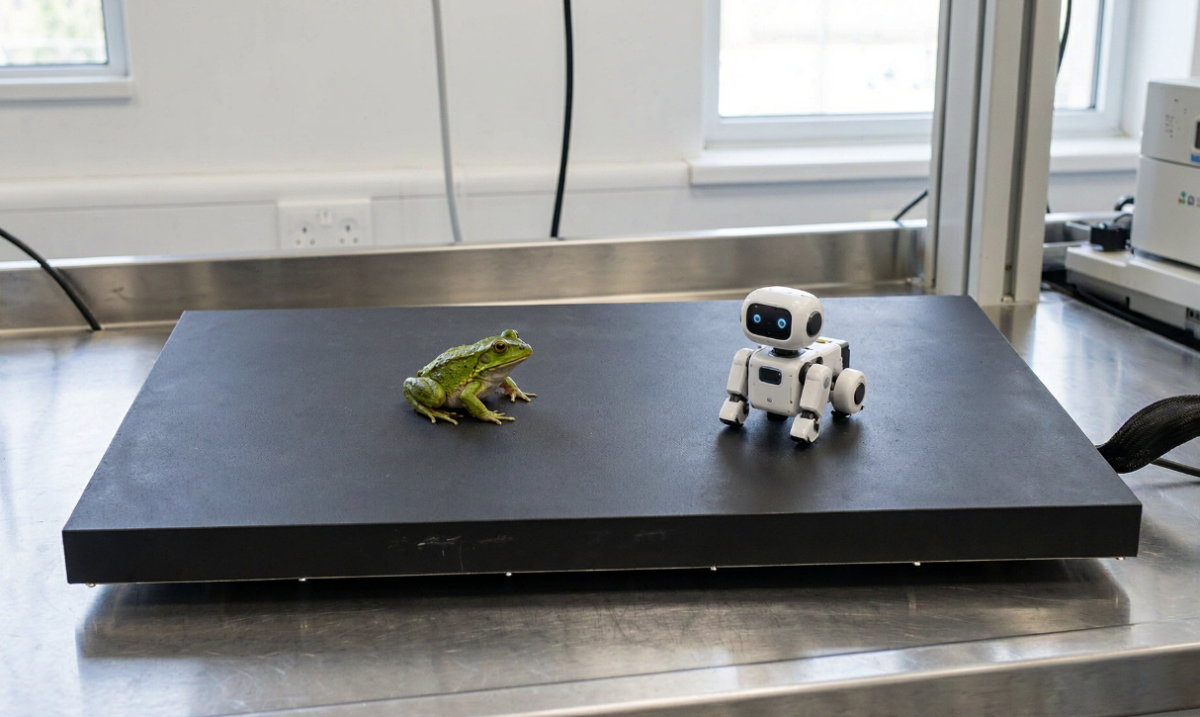
In the fields of sports biomechanics, biomimetic robotics, and micro-structure testing, the available force measurement methods often struggle to balance range, precision, and dynamic response. A single push-off by a small animal, a single ground contact by a micro-robot's foot, or a single push-pull by a flexible actuator may involve forces of only a few newtons or even less, with durations of only tens of milliseconds. Using large-range force measurement equipment to capture these signals is like weighing a feather on a platform scale—it is not that readings cannot be obtained, but that the readings can hardly carry the detail and credibility required for research.
The PRESSURE FILMS high-precision low-range 3D force plate is an experimental tool designed precisely to address this pain point: with a 200 N vertical force range, a 5000 Hz sampling frequency, and ±0.2%FS accuracy as its basic configuration, and with the range customizable according to specific needs, it provides a quantifiable, traceable, and extensible observation window for low-range dynamic force measurement.
The core positioning of the PRESSURE FILMS high-precision low-range 3D force plate can be summarized in two sentences: measure small forces accurately, and capture fast processes completely. A 200 N vertical force range means it is designed for lightly loaded contact processes rather than large-range scenarios such as sprinting or heavy landings; a 5000 Hz sampling frequency means it can record the details of force–time curves at a sufficiently dense temporal resolution, preventing peaks from being "missed" or waveforms from being over-smoothed.
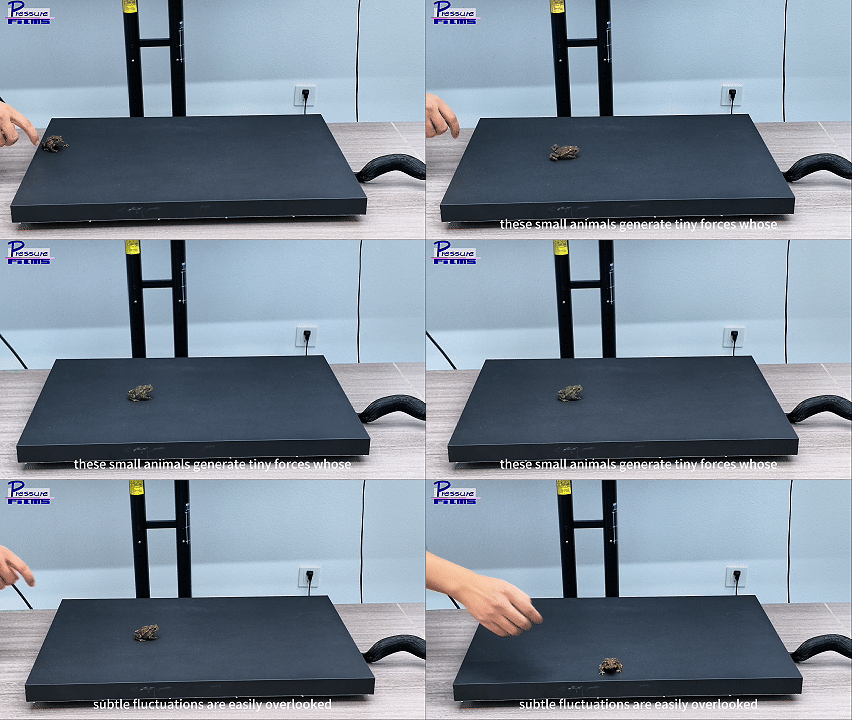
The feature that the range can be customized according to specific needs further indicates that the PRESSURE FILMS high-precision low-range 3D force plate is not a fixed-specification "general-purpose scale," but an experimental platform that can be matched to the force level of the research subject—only when the range is appropriately selected can precision and resolution fall within the most meaningful interval.
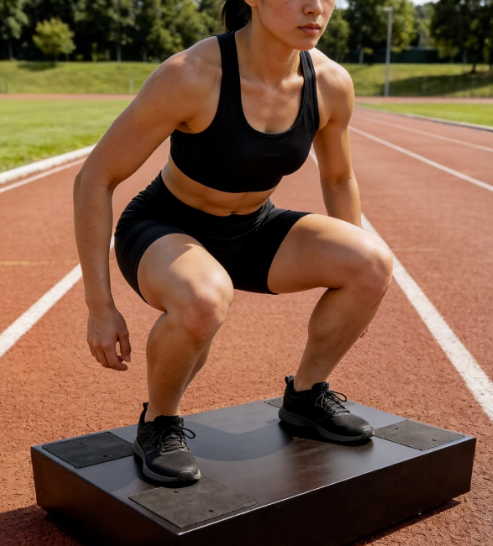
The PRESSURE FILMS high-precision low-range 3D force plate can record force changes during dynamic processes such as jumping, landing, ground contact, and pushing, and can acquire and display force curves in real time. On this basis, the system supports indicator extraction from force–time curves: peak force, average force, contact time, time to peak force, loading rate, unloading rate, and so on. These indicators may appear basic, but in fact they constitute the skeleton of dynamic process analysis.
Taking the jumping of a small animal as an example, peak force reflects the maximum load at the instant of push-off, contact time reflects the length of the force application window, time to peak force reflects the rhythm of force application, and loading rate and unloading rate respectively characterize how quickly force is built up and how quickly it is released. By combining these indicators, researchers can transform a qualitative description such as "jumping powerfully" into quantitative features that are comparable and amenable to statistical analysis.
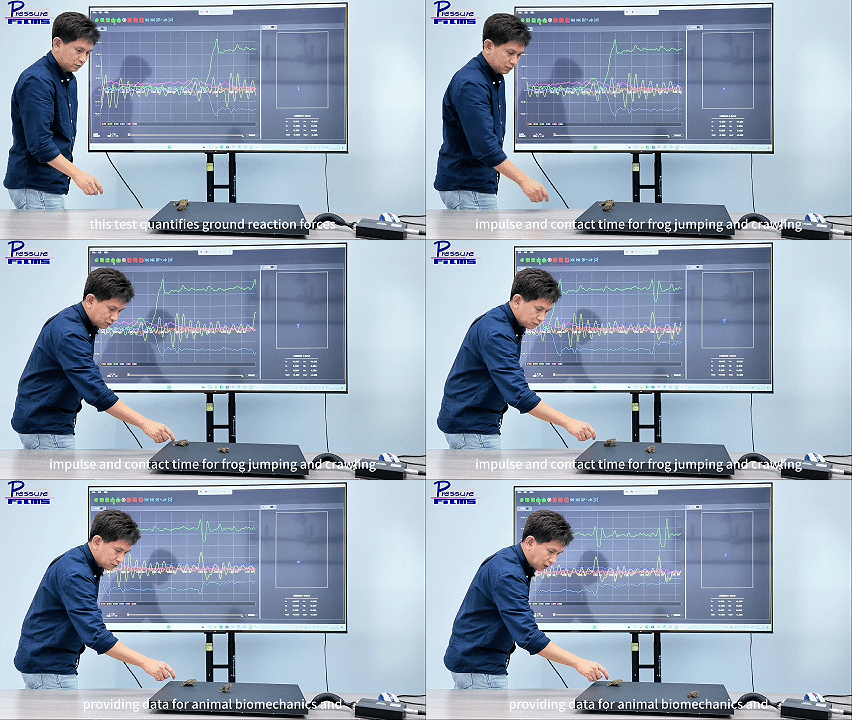
Impulse and propulsion capability assessment is another key function. Integrating the force–time curve allows the calculation of impulse, and impulse is directly related to the overall propulsion effect. The propulsion capability of different motions, different structures, or different test conditions can be compared laterally through impulse. For jumping robots or micro propulsion mechanisms, a high peak force does not necessarily mean a good overall propulsion effect; if the contact time is too short or the force curve shape is poor, the impulse may not be ideal.
In small animal testing, the PRESSURE FILMS high-precision low-range 3D force plate can identify key phases such as takeoff contact, sustained force application, and leaving the platform. The value of this capability lies in its segmentation of the continuous force–time curve into biologically meaningful phases.
Combined with high-speed video, hindlimb movements and changes in ground reaction force can be analyzed synchronously, thereby corresponding "movement images" with "mechanical data." This synchronization is not merely side-by-side display, but rather enables researchers to answer questions such as "at what angle of hindlimb extension does vertical force reach its peak" and "how does force decay in the last few milliseconds before leaving the platform."
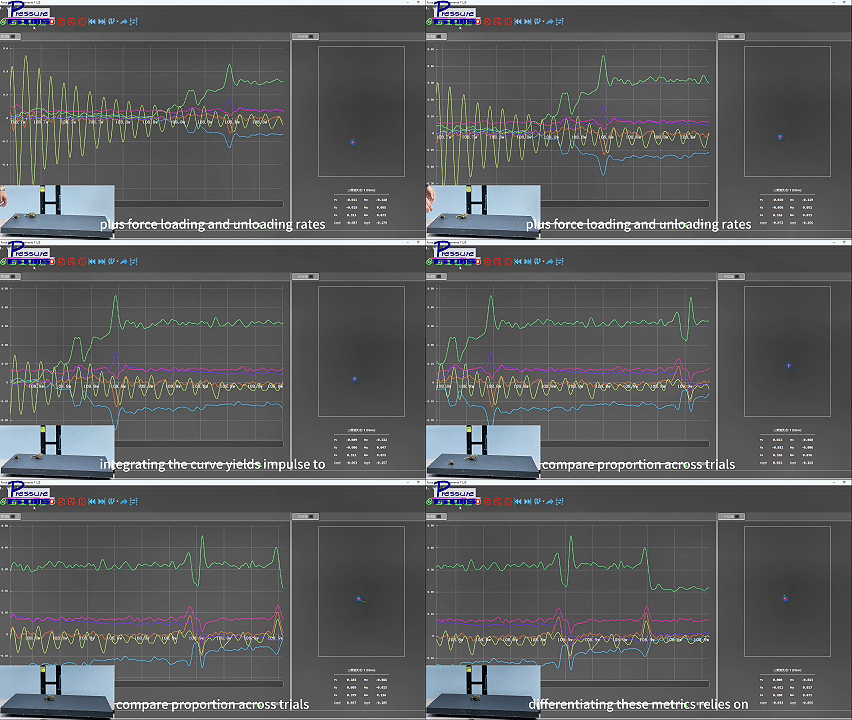
The multi-device synchronization function further extends this analytical framework. Depending on the specific configuration, the PRESSURE FILMS high-precision low-range 3D force plate can be used synchronously with high-speed cameras, motion capture, EMG, and other devices, corresponding movement images, posture changes, and mechanical data.
The analyzable indicators of the PRESSURE FILMS high-precision low-range 3D force plate include vertical ground reaction force, peak force, average force, contact time, takeoff force application time, leaving-platform time, force rise rate and unloading rate, force impulse, as well as force differences across different trials, individuals, or conditions. These indicators cover common needs ranging from single-event description to between-group comparison.
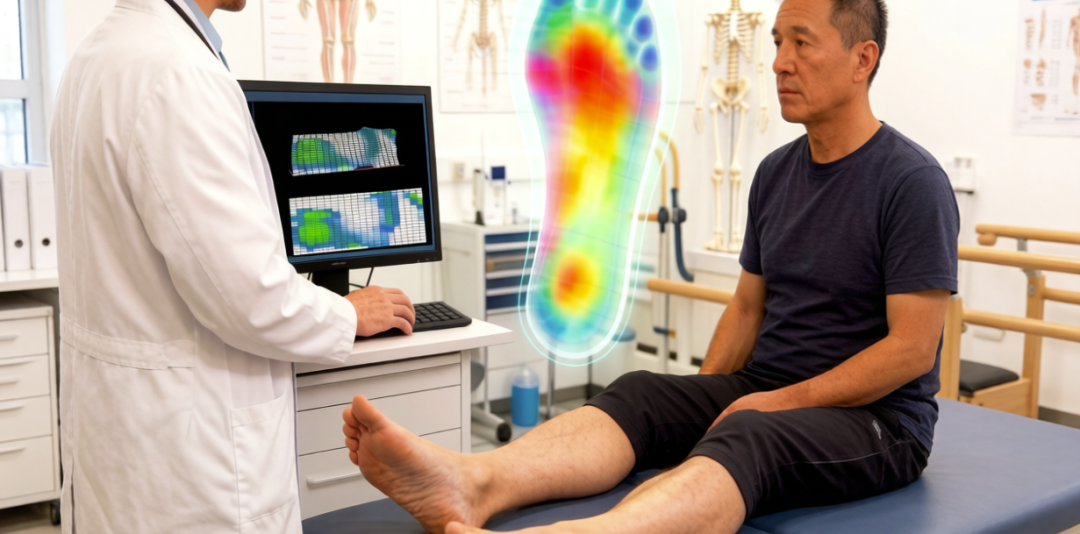
On this basis, the PRESSURE FILMS high-precision low-range 3D force plate also lists directions for further analysis: fore-aft propulsion force and lateral force, resultant force magnitude and direction, traction and slip performance on different surfaces, as well as estimation of the friction coefficient from the ratio of tangential force to normal force, and further calculation of the center of pressure (COP) to analyze the movement trajectory of the contact force application point.
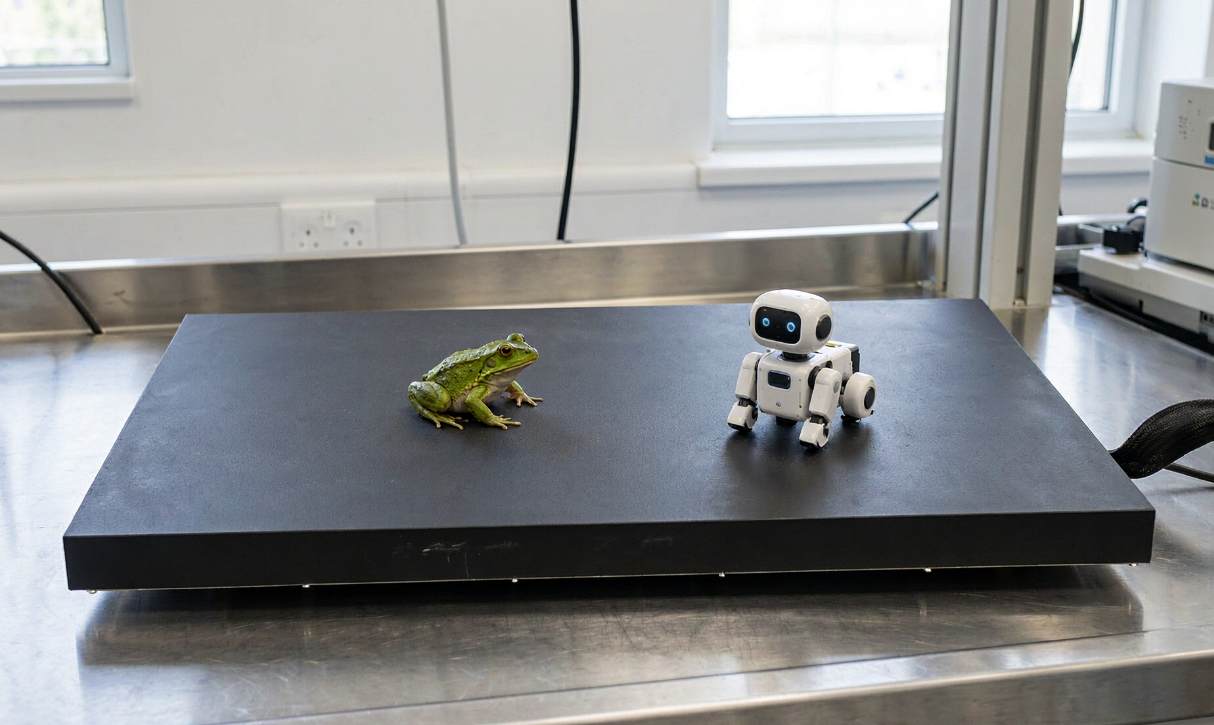
In the field of animal locomotion biomechanics, the PRESSURE FILMS high-precision low-range 3D force plate can be used for studies of jumping, landing, climbing, and gait in small animals such as frogs, lizards, insects, and mice, quantifying ground reaction forces and propulsion characteristics at different movement phases. The force levels of small animals match the 200 N range, and the 5000 Hz sampling helps capture rapid jumping and ground contact events. Combined with synchronized high-speed video, researchers can correspond hindlimb movements with changes in ground reaction force, analyzing the timing of takeoff force application and the leaving-platform process.
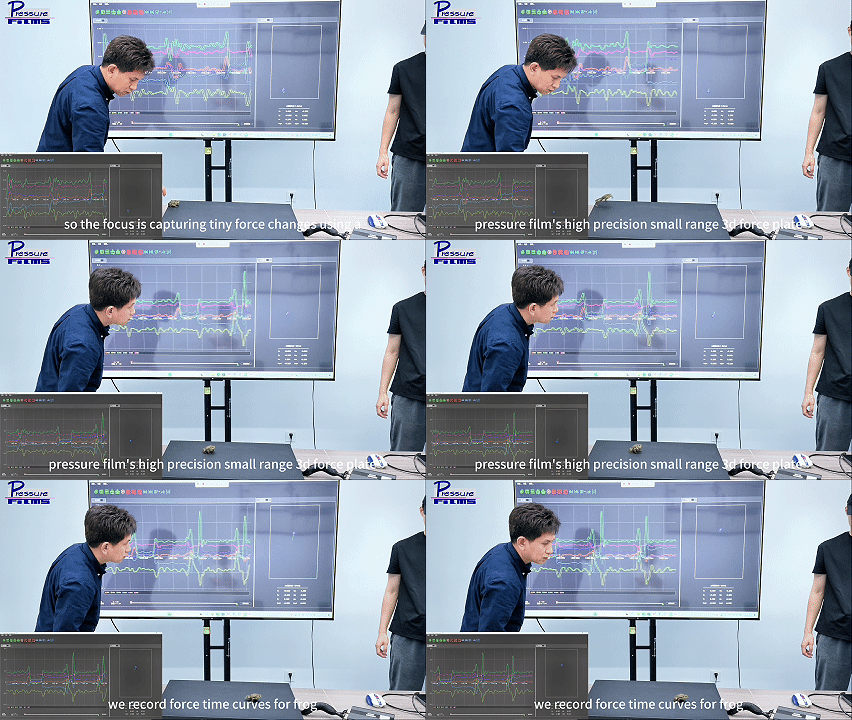
In the field of biomimetic robotics and micro-robotics, the PRESSURE FILMS high-precision low-range 3D force plate can be used for tests of foot-end force, takeoff efficiency, landing impact, and adaptability to different ground surfaces in jumping robots, legged robots, soft robots, and others. Foot-end force is an important external observable for validating robot design and control strategies: takeoff efficiency can be evaluated through the relationship between impulse and energy input, landing impact can be characterized by peak force and loading rate, and adaptability to different ground surfaces can be compared relatively through estimation of tangential force, normal force, and friction coefficient.
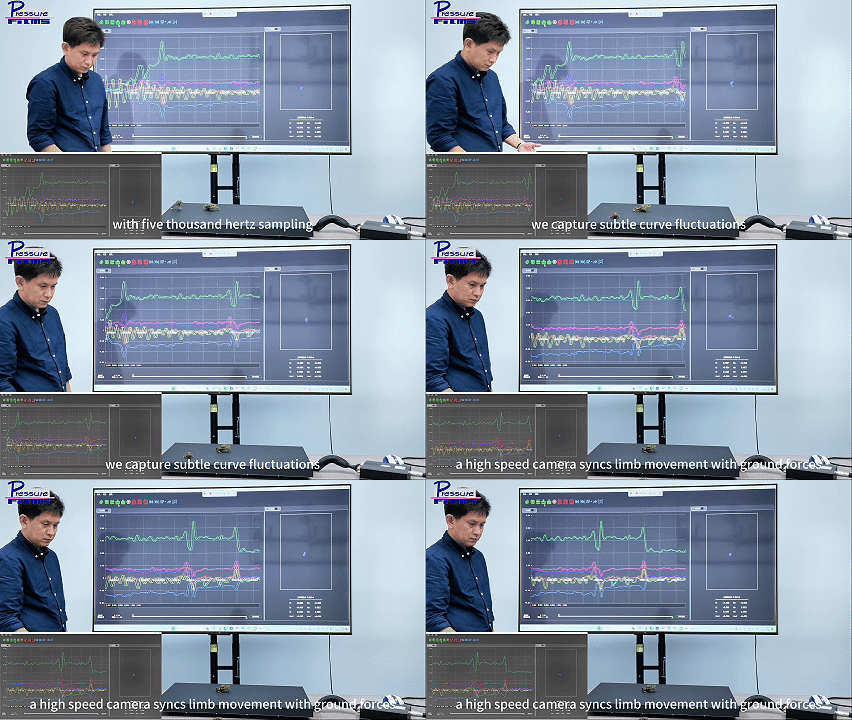
In the direction of robot foot-end and actuation structure development, the PRESSURE FILMS high-precision low-range 3D force plate can compare peak force, impulse, and contact stability under different foot-end materials, buffering structures, elastic elements, actuators, or control strategies, providing data references for structural iteration. Contact stability can be observed from perspectives such as fluctuations in the force curve, the movement trajectory of the center of pressure, and the consistency of multiple repeated trials. For R&D teams, this type of data can transform "feel" and "experience" into comparable engineering indicators.
In the field of surface material and friction testing, the PRESSURE FILMS high-precision low-range 3D force plate can be used to compare the effects of surfaces with different roughness, hardness, humidity, or coatings on contact force and slip tendency, and to conduct friction coefficient-related tests. The ratio of tangential force to normal force provides a relative indicator of friction behavior; combined with controlled experiments on different surfaces, it can form comparative data on material–contact–mechanical performance.
In the field of micro-actuator and flexible structure testing, the PRESSURE FILMS high-precision low-range 3D force plate is suitable for evaluating the output force, response process, and repeatability of small motors, spring energy storage mechanisms, flexible actuators, and micro gripping and pushing mechanisms. Output force can be characterized by peak force and average force, the response process can be described by loading rate and time to peak force, and repeatability can be assessed through curve comparison across multiple trials and the degree of dispersion of indicators.
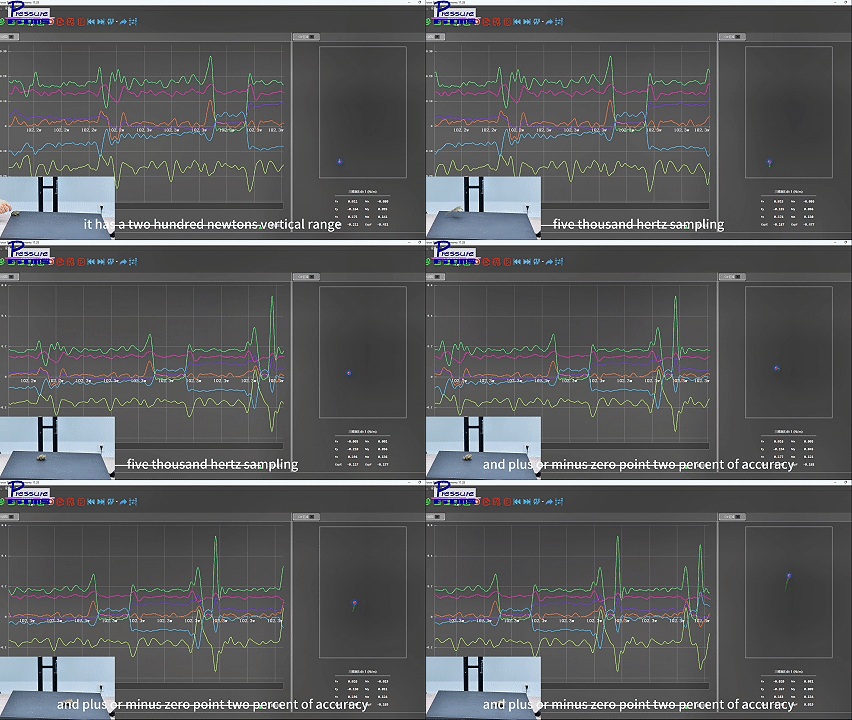
In the field of university research and experimental teaching, the PRESSURE FILMS high-precision low-range 3D force plate can combine high-speed video and mechanical data to support experimental teaching and research in directions such as animal locomotion, robotics, biomimetics, materials, and mechanical design. For teaching, the real-time display and playback of force–time curves make abstract dynamics concepts visible; for research, multi-device synchronization and data export provide support for the complete experimental workflow.
The value of the PRESSURE FILMS high-precision low-range 3D force plate lies not in competing with large-range equipment over "how large a force it can measure," but in establishing credible observation capability in the world of minute forces.
From a single jump of a frog to a single ground contact of a micro-robot, from a single comparison of foot-end materials to a single push-pull of a flexible actuator, what the PRESSURE FILMS high-precision low-range 3D force plate provides is not a set of isolated numbers, but a verifiable path from mechanical signals to research conclusions. For users who need to conduct research under low-range, fast-process conditions, this capability of "measuring accurately, recording completely, analyzing deeply, and managing reliably" is precisely the quality that an experimental tool should possess.
- End -
Recent Post
 Nov 06, 2026Application landscape of PRESSURE FILMS high-precision low-range 3D force plates: from frog jumping to micro-robot ground contact
 Oct 29, 2026Mechanical Measurement Principles and Clinical Applications of Three-Dimensional Force Plates
![]() Sep 30, 2026PF invites you to attend ICMMB 2026, the 24th International Conference on Medical and Biological Mechanics (Oct. 6–8).
 Jun 18, 2026Focus on Plantar Pressure Distribution | Technical Applications of the Pressurefilms Insole‑Type Flexible Fabric Pressure Distribution System

Contact Us
Derect Contact with us